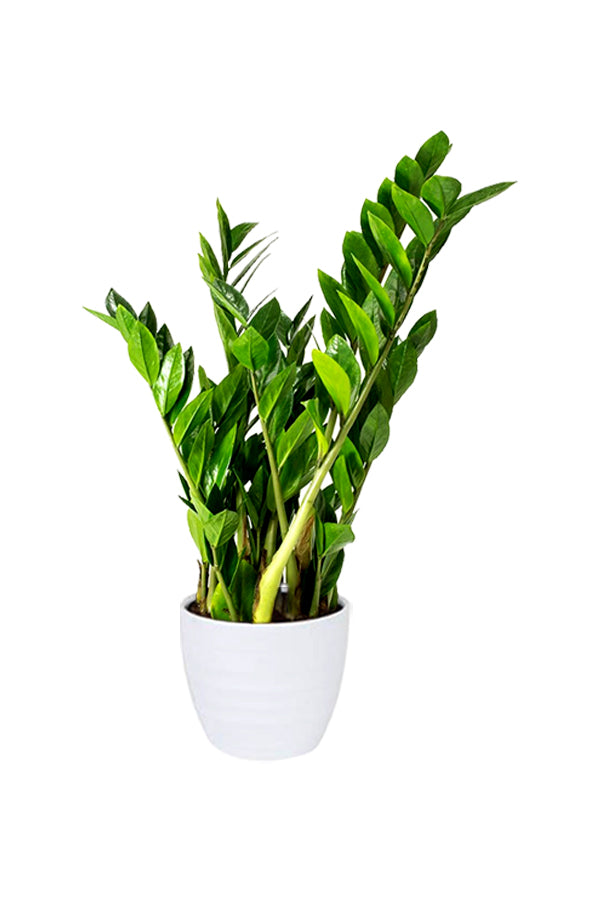
Asparagus Fern (Asparagus Densiflorus ‘Srengeri’)

Plant Bio

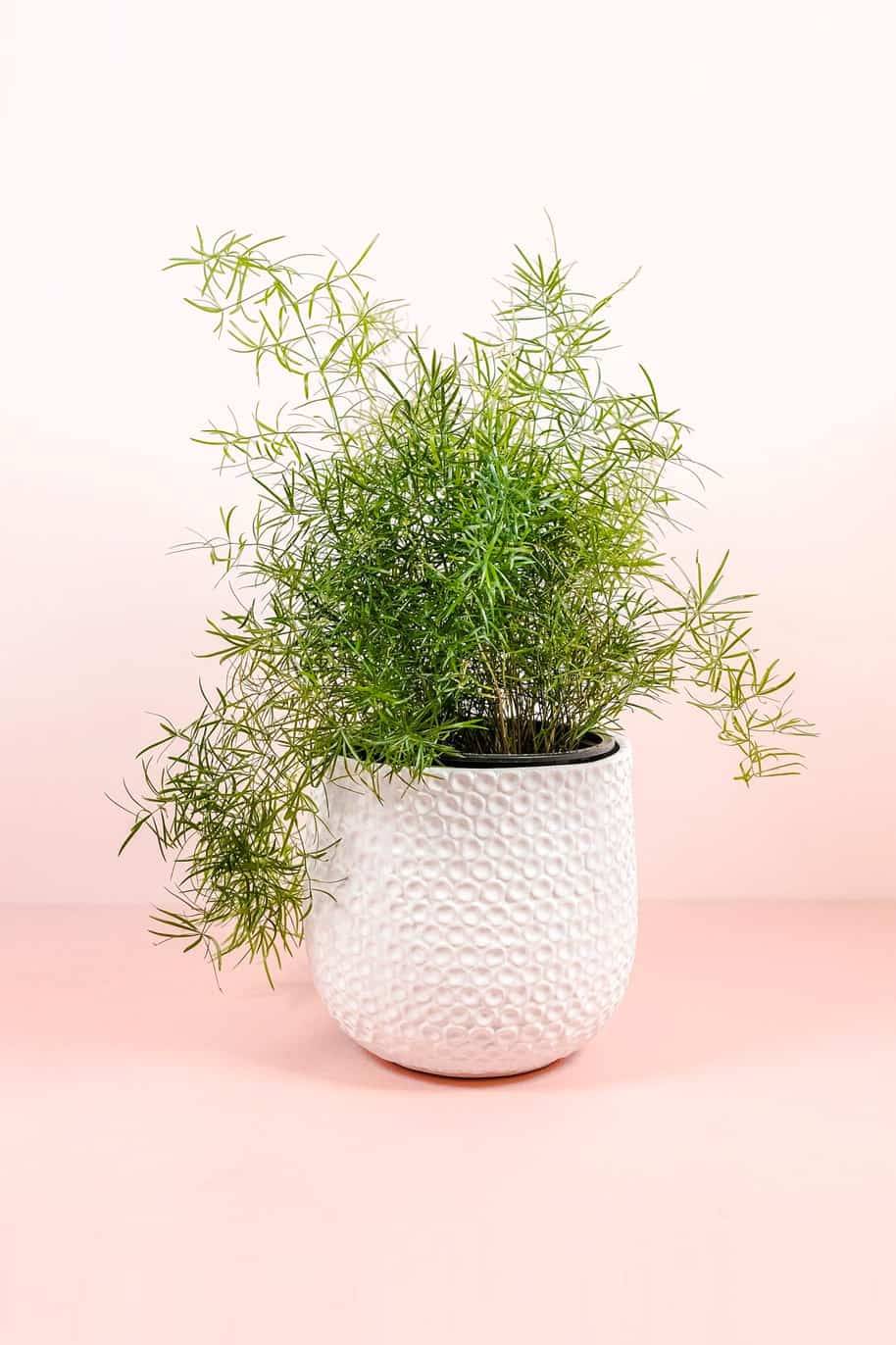
Asparagus Fern is not a true fern, but a member of the lily family (Liliaceae). Long, arching stems densely covered with short, needle-like leaflets give this plant a delicate appearance. It has a cascading habit that makes it ideal for a hanging basket. Mature plants will bloom in summer with small, white-to-pale pink flowers, sometimes followed by clusters of green berries that turn red in the winter. These berries are poisonous if eaten. Florists love the feathery, emerald-green foliage in bouquets.

The asparagus fern thrives in dappled shade, although it can be acclimated to more light. Avoid direct, bright sunlight and try to maintain a warm temperature. If you have a shady porch outside, or a greenhouse, the indoor plants will likely respond with abundant growth over the summer. Asparagus ferns should be planted in loose, well-draining potting soil. Keeping an asparagus fern hydrated takes a little effort. This plant thrives on humidity. Mist the plant daily, focusing on the arching stems. These plants are considered poisonous and should be kept away from pets and children.

Calathea Goeppertia Ornata

Plant Bio

Add a bold, elegant touch to your indoor space with the Calathea Goeppertia Ornata, a stunning houseplant known for its striking dark green leaves marked with elegant pink pinstripes. Native to South America, this low-maintenance beauty is ideal for homes and offices across the UAE, bringing a pop of color and sophisticated texture to your décor.

The Calathea Goeppertia Ornata thrives in bright, indirect light and prefers slightly humid environments, making it an excellent choice for living rooms, shaded patios, or bathrooms with natural light. It is also a fantastic air purifier, helping cleanse your indoor air while adding tropical vibes to your interiors.

Pair it with other humidity-loving plants like Peace Lily, Calathea Medallion, or Ferns for a lush, jungle-like corner. This plant is non-toxic, making it safe for households with pets or children.

Care Tips: Keep the soil consistently moist but not soggy; water when the top inch feels dry. Use distilled or filtered water to avoid leaf spotting. Mist the leaves regularly to maintain humidity, and keep it away from cold drafts or direct sunlight.

Whether you’re a seasoned plant lover or just starting out, buying Calathea Goeppertia Ornata is a perfect way to elevate your indoor plant collection.

Yucca Desmetiana Or Blue BoyYucca Desmetiana


Plant Bio

Yucca desmetiana, commonly known as “Blue Boy,” is a striking succulent plant known for its attractive blue-green foliage. This yucca species is native to Mexico and is popular in landscaping due to its unique appearance. Here’s a description and care guide for Yucca desmetiana “Blue Boy”:

Description:

Leaves: The leaves of Yucca desmetiana “Blue Boy” are slender, lance-shaped, and have a blue-green to silvery-blue color. They often have a gentle arching or cascading growth habit, creating an elegant and visually appealing form.
Size: This yucca typically grows to a moderate size, reaching heights of 2 to 4 feet (0.6 to 1.2 meters) and spreading to a similar width. It forms a clumping or mounding shape over time.
Flowers: Yucca desmetiana may produce tall flower spikes, bearing white or cream-colored bell-shaped flowers in late spring or early summer. However, it’s primarily grown for its foliage, and flowering is less common in indoor specimens.

Care:

Sunlight: Yucca desmetiana “Blue Boy” thrives in bright, indirect sunlight or partial sun. It can tolerate some direct sunlight, especially in the morning, but should be protected from intense afternoon sun, which can scorch the leaves.

Temperature: This yucca is best suited for warm and temperate climates. It can tolerate occasional light frost but should be protected from extended periods of freezing temperatures. It’s suitable for USDA hardiness zones 9 to 11.

Soil: Use well-draining soil, such as a cactus or succulent mix, to ensure good drainage and prevent waterlogged roots. Yuccas are adapted to arid conditions and do not tolerate overly wet soil.

Watering: Allow the top 2-3 inches (5-7.5 cm) of the soil to dry out between waterings. Yucca desmetiana is drought-tolerant and prefers to be on the drier side, so be cautious not to overwater. Reduce watering in the winter when growth slows down.

Fertilization: Feed your Yucca desmetiana with a balanced, diluted, liquid fertilizer during the growing season (spring and summer). Fertilize sparingly, as these plants do not require heavy feeding.

Potting: If growing in a container, choose a pot with drainage holes to prevent water buildup. Repot your yucca when it becomes root-bound or outgrows its container, typically every 2-3 years.

Pruning: Prune away any dead or damaged leaves by cutting them close to the base of the plant. Trimming spent flower spikes can also help maintain the plant’s appearance.

Pests and Diseases: Yuccas are generally resistant to most pests and diseases. However, they can occasionally attract scale insects or mealybugs. Regularly inspect your plant for signs of infestation and treat as needed.

Propagation: Yucca desmetiana “Blue Boy” can be propagated from offsets or stem cuttings. Allow cuttings to callus before planting them in well-draining soil.

Yucca desmetiana “Blue Boy” is a stunning and relatively low-maintenance succulent that can add a touch of elegance to your garden or indoor space. With proper care, including suitable light, watering, and well-draining soil, your Blue Boy yucca can thrive and become a striking focal point in your landscape or home

Cambodian Dragon TreeDracaena cambodiana

Product Bio

The Cambodian Dragon Tree, often referred to as Dracaena cambodiana, is a striking and unique plant native to Southeast Asia. It’s a member of the Dracaena genus, which includes many popular houseplants. Here’s a description and care guide for the Cambodian Dragon Tree:

Description:

Leaves: The Cambodian Dragon Tree features long, lance-shaped leaves that can reach lengths of up to 2 feet (60 cm). The leaves are typically green but may have subtle variations in color and markings depending on the specific variety.
Trunk: The plant develops a woody stem or trunk as it matures, which can become gnarled and interestingly shaped over time. This trunk gives the plant its tree-like appearance.
Growth Habit: Dracaena cambodiana tends to grow as a tall, upright shrub or small tree. It can reach heights of 6 to 15 feet (1.8 to 4.5 meters) when cultivated indoors. In its native habitat, it can grow even taller.
Flowers: The plant occasionally produces small, inconspicuous, and fragrant flowers in clusters, although indoor specimens rarely bloom.

Care:

Light: Provide bright, indirect sunlight for your Cambodian Dragon Tree. It can tolerate some direct morning sunlight but should be shielded from harsh afternoon sun, which can scorch the leaves.

Temperature: Keep the plant in a warm environment. It thrives in temperatures between 65°F to 80°F (18°C to 27°C). Protect it from drafts and sudden temperature fluctuations.

Humidity: Dracaena cambodiana appreciates moderate humidity levels. If you’re growing it indoors, consider using a humidity tray or misting the leaves occasionally to raise humidity levels.

Watering: Allow the top inch (2.5 cm) of the soil to dry out between waterings. These plants are drought-tolerant and prefer slightly drier conditions over consistently soggy soil. Water less frequently in the winter months.

Soil: Use well-draining potting soil that allows excess water to escape. A mix designed for houseplants or a combination of regular potting soil and perlite works well.

Fertilization: Feed your Cambodian Dragon Tree with a balanced, liquid fertilizer during the growing season (spring and summer). Apply fertilizer every 4-6 weeks, but avoid over-fertilizing, as this can lead to salt buildup.

Pruning: Prune the plant as needed to maintain its shape and remove any dead or yellowing leaves. You can also cut back leggy growth to encourage bushier growth.

Repotting: Repot your Dracaena cambodiana when it becomes root-bound or outgrows its container. Repotting is typically necessary every 2-3 years.

Pests and Diseases: These plants are generally resistant to pests, but they can occasionally attract spider mites or mealybugs. Regularly inspect your plant for signs of infestation and address them promptly.

Toxicity: Keep in mind that Dracaena cambodiana is toxic to pets if ingested. Be cautious if you have animals in your home and place the plant where pets cannot access it.

The Cambodian Dragon Tree is a captivating and relatively low-maintenance plant that can add an exotic touch to your indoor or outdoor space. With proper care, including suitable light, watering, and occasional maintenance, your Dracaena cambodiana can thrive and become a striking focal point in your home or garden.

Ehretia Microphylla Buxus Wall ShapedEhretia microphylla

Plant Bio

The Fukien Tea is originally from China and it was named after the province Fukien, in Chinese Fuijan. It is also endemic in parts of Japan, Indonesia, Taiwan and Australia. The Fukien Tea is still very popular for Penjing in China and in Western countries it is a common indoor Bonsai tree.

Its small dark-green shiny leaves have tiny white dots on the upper side and are covered with hairs underneath. Small white flowers can appear all year round and sometimes produce small yellow-red to dark berries.

The Fukien Tea is an indoor Bonsai which can only be kept outside all year in very warm climates. It needs a lot of light . In addition to the few hours of daylight there is the problem of dry air. You can use a plant lamp if necessary and put a large tray filled with wet gravel or foamed clay under the pot for more humidity. Keep the tree moist, as it doesn’t like droughts. But be careful not to water too often because it doesn’t like soil wetness either. As soon as the soil surface gets dry the tree needs to be watered generously but it must not be left standing in excess water. Liquid fertilizers can be used in carefully measured dosage and only on moist soil.

Transform your outdoor space with the beautiful Ehretia Microphylla Buxus Wall Shaped plant, a perfect choice for creating elegant green walls and lush hedges. This hardy plant is renowned for its vibrant foliage and striking structure, making it an excellent addition to both residential and commercial landscapes.

Ideal for gardeners seeking low-maintenance options, the Ehretia Microphylla thrives in a variety of conditions but prefers well-drained soil and partial to full sunlight. Its compact size makes it perfect for borders, privacy hedges, or as a decorative feature in pots. Pair it with other plants like hibiscus or bougainvillea for a stunning contrast, or use it alone for a sleek, modern look.

Care tips include regular watering, especially during dry spells, and occasional pruning to maintain its shape. With proper care, this resilient plant will provide year-round beauty and enrich your outdoor space with a touch of greenery. Order your Ehretia Microphylla Buxus Wall Shaped today from Plantshop.me and enjoy fast delivery across the UAE!

Century PlantAgave americana ‘Variegata

Plant Bio

Agave americana ‘Variegata,’ commonly known as Variegated Century Plant or Variegated Agave, is a stunning succulent known for its bold and striking appearance. This variegated variety of Agave americana features cream or yellow stripes along its leaves, adding a touch of uniqueness to its already impressive form. Here’s a description and care guide for Agave americana ‘Variegata’:

Description:

Leaves: The leaves of Agave americana ‘Variegata’ are large, fleshy, and thick with pointed tips. They are usually green with striking cream or yellow variegation along the margins and sometimes even on the leaf surface. The variegation patterns can vary between individual plants.
Size: This agave can reach a mature size of around 6 to 8 feet (1.8 to 2.4 meters) in height and width, with its leaves radiating from a central point to form a rosette shape.
Flowering: Agave americana is monocarpic, meaning it flowers once in its lifetime and then dies. When it does flower, a tall flower stalk bearing yellow or greenish flowers emerges from the center of the rosette. This can take several years to occur, and the main plant may produce offsets (pups) before flowering.

Care:

Sunlight: Agave americana ‘Variegata’ thrives in full sun. It requires direct sunlight for several hours a day to maintain its compact and healthy growth. If grown indoors, provide the brightest possible light near a sunny window.

Soil: Use well-draining soil that allows excess water to escape quickly. A mix designed for cacti and succulents or a combination of regular potting soil, sand, and perlite works well.

Watering: Agaves are adapted to arid conditions and prefer infrequent but deep watering. Allow the soil to dry out completely between waterings. Overwatering can lead to root rot, so be cautious and water sparingly, especially during the dormant period.

Temperature: Agave americana ‘Variegata’ is hardy in USDA hardiness zones 8 to 11. It can tolerate some cold, but it’s best to protect it from frost and freezing temperatures, especially if grown in containers.

Potting: If growing in a container, ensure that it has good drainage. Choose a pot that is slightly larger than the plant’s root system to allow for some growth.

Fertilization: Fertilize sparingly with a balanced, diluted, and low-nitrogen fertilizer during the active growing season (spring and summer). Avoid over-fertilizing, as succulents prefer nutrient-poor soil.

Pruning: Remove any dead or damaged leaves by cutting them close to the base of the plant. Be cautious when handling agaves, as their leaves are usually armed with sharp spines.

Pests and Diseases: Agaves are generally resistant to pests and diseases. However, they can be susceptible to mealybugs and aphids. Regularly inspect the plant for signs of infestation and treat as needed.

Propagation: Agave americana ‘Variegata’ can be propagated by removing and planting the offsets (pups) that develop at the base of the main plant. Allow the pups to develop their own root system before transplanting.

Agave americana ‘Variegata’ is a stunning and low-maintenance succulent that can add a touch of elegance to your garden or indoor space. With proper care, including ample sunlight, well-draining soil, infrequent watering, and protection from frost, your variegated agave can thrive and become a focal point in your landscape.

Rhapis Excelsa TallRhapis Excelsa

Plant Bio
Whether grown indoors or outdoors, lady palm is easy to grow. Tolerant of low-light conditions, it has large, hand-shape leaves with long, glossy, dark green, finger-like leaflets. The foliage forms a dense canopy above clumps of sturdy stems that are covered with dark brown fibers that have a woven appearance.
Rhapis excelsa is the most widely grown species of lady palm. It has been cultivated for so long that its exact origins are unknown. This lady palm grows in light to heavy shade and makes an elegant houseplant. It also forms an excellent privacy screen. It grows 10 feet tall and wide.

Lady Palm Care Must-Knows

Lady palm spreads by underground stems called rhizomes. Plan to remove the suckers on the outskirts of a lady palm regularly to keep the plant contained. Dig the suckers out with a sharp spade or cut them off with hedge trimmers. Otherwise, lady palms don’t require much pruning, except for damaged or dead fronds. Use a sharp pair of sterilized pruners to snip off the fronds.

Rich in texture, lady palm makes an attractive accent plant indoors, too. Small varieties, sometimes called miniature varieties, are wonderful for tabletops in large spaces like living rooms and family rooms. Large varieties can enliven the corner of a room. All lady palms grow best in bright, indirect light. A south- or west-facing window covered by a sheer curtain is a good choice. These adaptable palms will grow in low-light areas, such as north- or east-facing windows, but expect them to grow exceptionally slow in this condition.

Water lady palms thoroughly when the surface of the soil mix is dry to the touch. Lady palms are slow-growing and benefit from a monthly dose of fertilizer from April through September. Use a houseplant fertilizer and dilute it to half-strength

Back to Top

Search For Products

Product has been added to your cart
★ Reviews