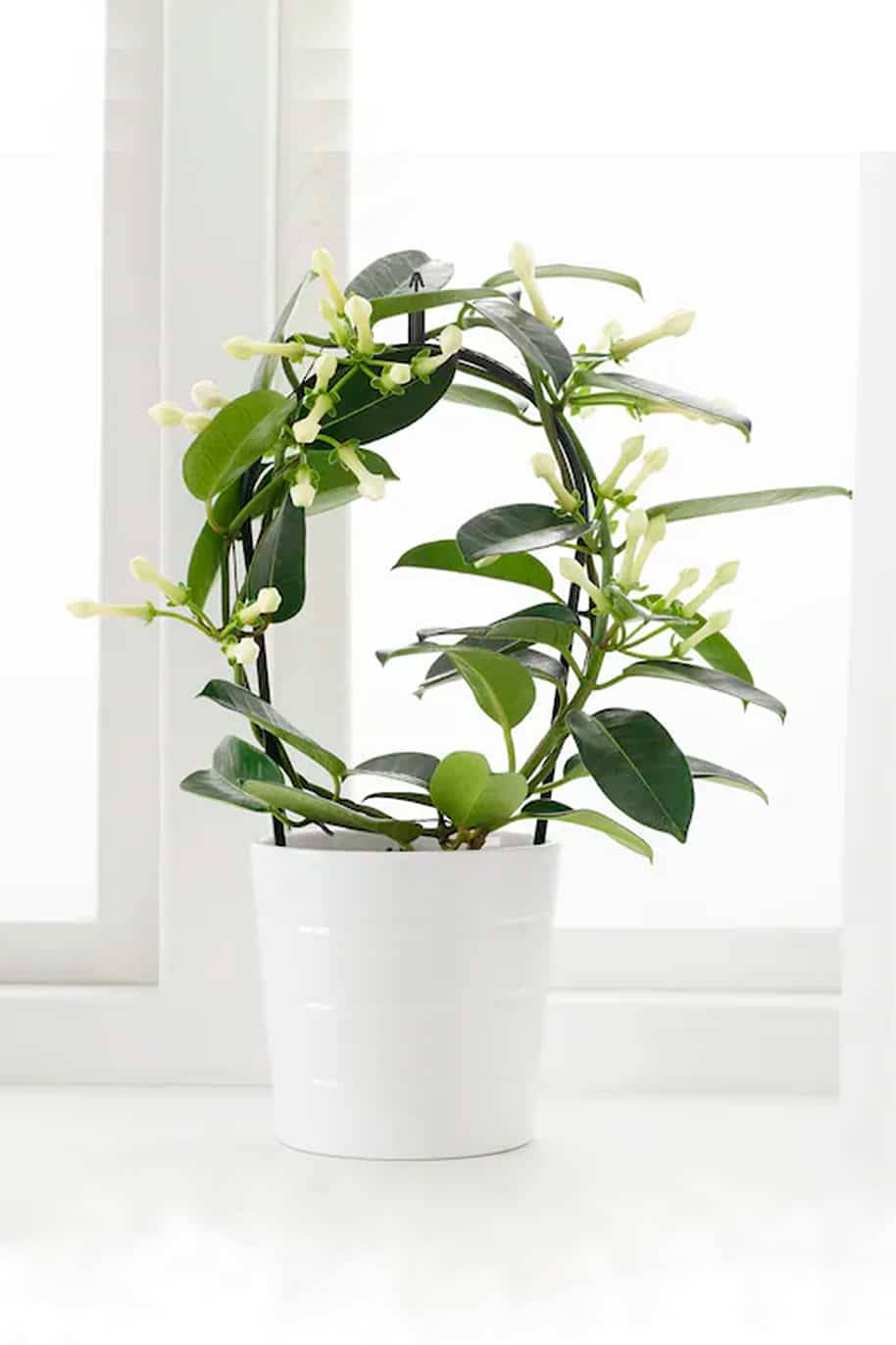
Madagascar Jasmine (Stephanotis floribunda)

Plant Bio

Position: bright but indirect light
Soil: good potting compost
Rate of growth: average to fast
Hardiness: tender (indoors only)
Current height: approximately 20cm (+ or – 10% including the pot)
Pot cover: choose a 14cm pot cover to give a good fit over the pot (15cm for a ceramic pot cover)

This beautiful twining climber has deliciously scented flowers and therefore is often used in bridal bouquets. In the home, it can be trained onto a support and the jasmine-like perfume of the flowers will fill the room for several weeks. As it matures it develops vigorous climbing stems, that are clothed with glossy evergreen leaves. Perhaps not ideal for the more novice gardener, it is however incredibly beautiful and rewarding, and can be moved outside during the warmer months of the year.

Please note that the pot in the photograph is not supplied with the plant (which is sent out in a simple nursery pot). They do however make excellent potted plants, and if you wish to pot yours up, we do have a wide range of pots on our website to choose from.

Home care: Throughout the summer you should always keep the soil moist but not waterlogged. In the colder months water less often, just giving it a good drink when the soil gets reasonably dry. Mist the leaves with water freely, especially if they are growing near central heating. Avoid sudden changes in temperature, which should be maintained above 15°C.
Calathea Rufibarba (Calathea Goeppertia Rufibarba)

Plant Bio

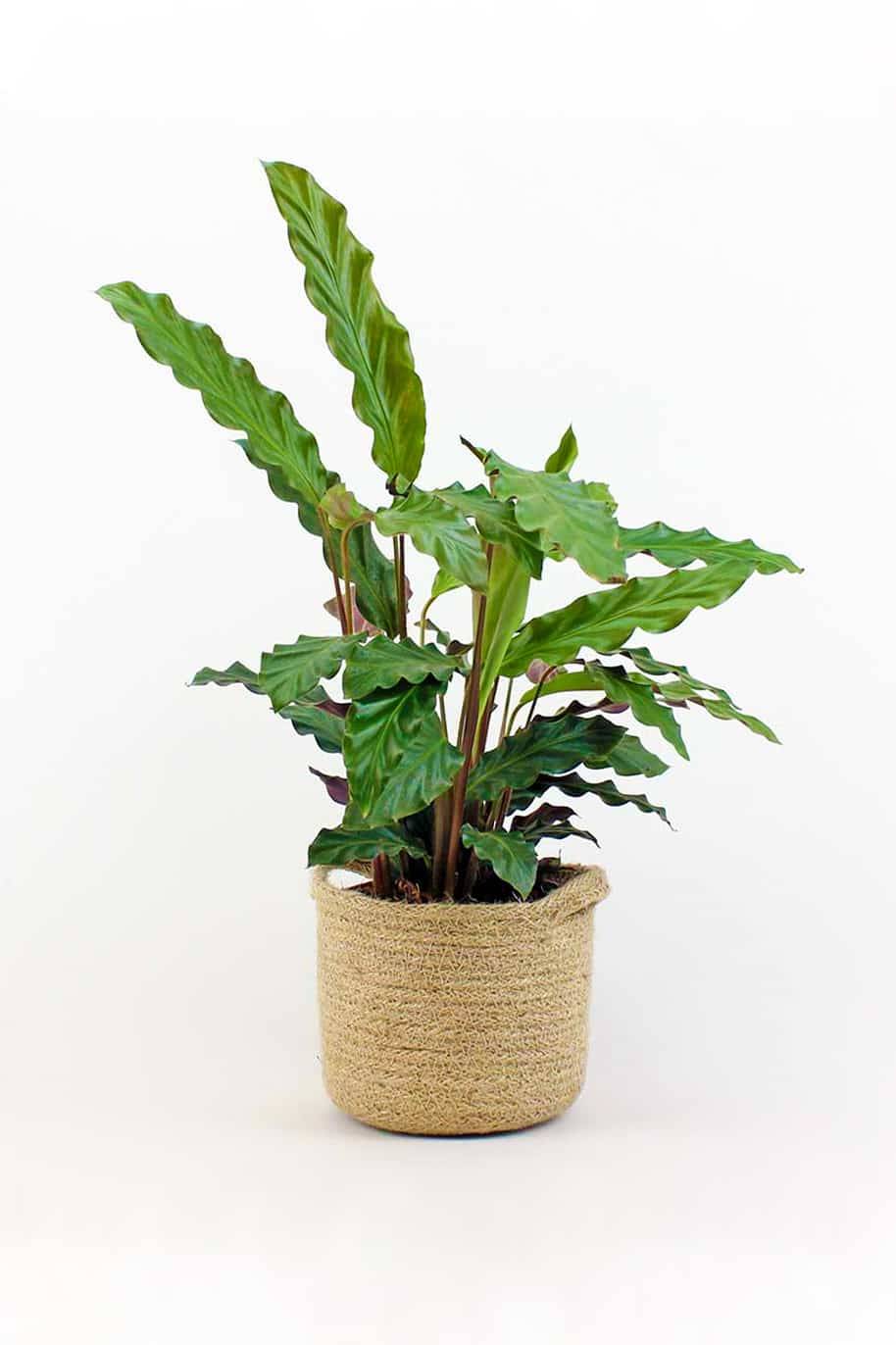
Buy Calathea Rufibarba, also known as the Velvet Calathea, and bring home a unique indoor plant with dramatic appeal and soft, velvety foliage. Native to the tropical forests of Brazil, this stunning houseplant is a favorite among collectors for its elongated, rippled leaves with deep green tops and rich burgundy undersides.

Perfect for indoor spaces in the UAE, the Calathea Rufibarba thrives in medium to bright indirect light and prefers a warm, humid environment. Its non-toxic nature also makes it safe for homes with pets and children. Ideal for living rooms, bedrooms, or offices, this plant adds texture, elegance, and air-purifying benefits to your interior décor.

Pair it with other humidity-loving plants like the Calathea Medallion, Maranta, or Peace Lily for a lush indoor jungle vibe. To care for your Calathea Rufibarba, keep the soil consistently moist but not soggy, mist regularly, and avoid direct sunlight to prevent leaf curling or browning.

Whether you’re an experienced plant lover or a beginner, the Calathea Rufibarba is a beautiful and low-maintenance addition to your plant family. Order now from Plantshop.me for fast delivery in Dubai, Abu Dhabi, Sharjah, and across the UAE

Pinnatum Cebu Blue (Philodendron)

Plant Bio

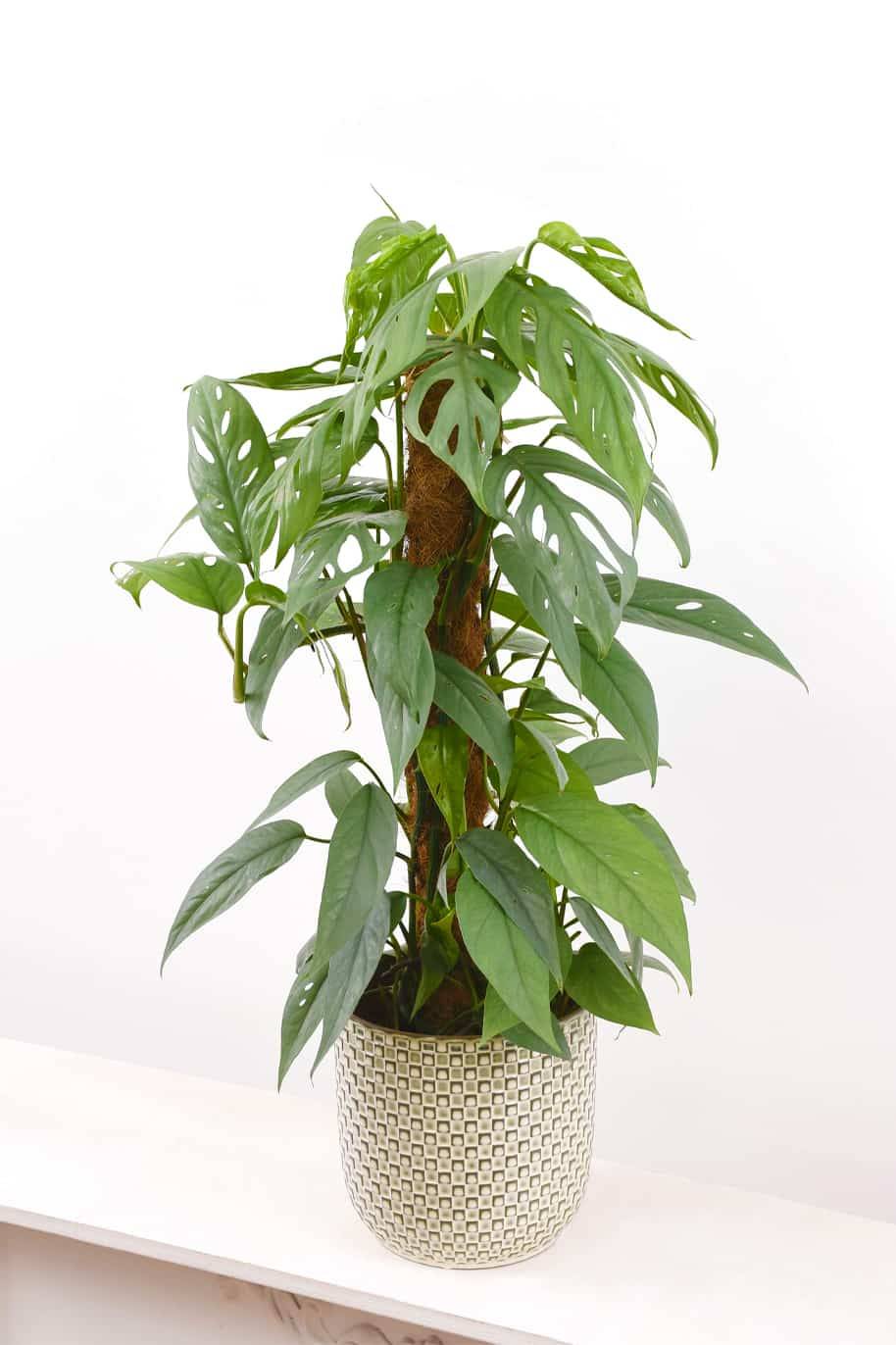
Epipremnum Pinnatum commonly known as Cebu Blue Pothos is a sparkling variant of pothos that is known for its silvery-blue leaves that seem to sparkle in the right light. The best thing about this stunning plant is that it adapts well to diverse indoor settings. It is also popular because of its low-maintenance quality. A true must have gem for all urban gardeners!

This is a great plant for those who don’t care for anything fussy but still want to benefit from its fantastic display of blue-silvery colored leaves. An undeniably stunning looking pothos choice, if you can offer Cebu Blue pothos a stable home environment, this is one plant that will reward you with fantastic growth for many years to come.

Plant care

Water / Humidity: This plant is very drought tolerant, so water sparingly, especially in the winter. Let the first 4-6 cm of soil dry fully between waterings. Tolerant with normal room humidity conditions.

Light: Bright, indirect light is ideal, but also tolerant of lower light conditions (will grow slower).

Soil / Nutrients: Well draining soil. You can apply a few drops of general houseplant fertilizer to the soil once a month from spring to summer, reducing nutrients during autumn and winter.

Temperature: The range of 12 – 25°C is ideal.

Propagation Bundle (PS Combo Set)

Plant Bio

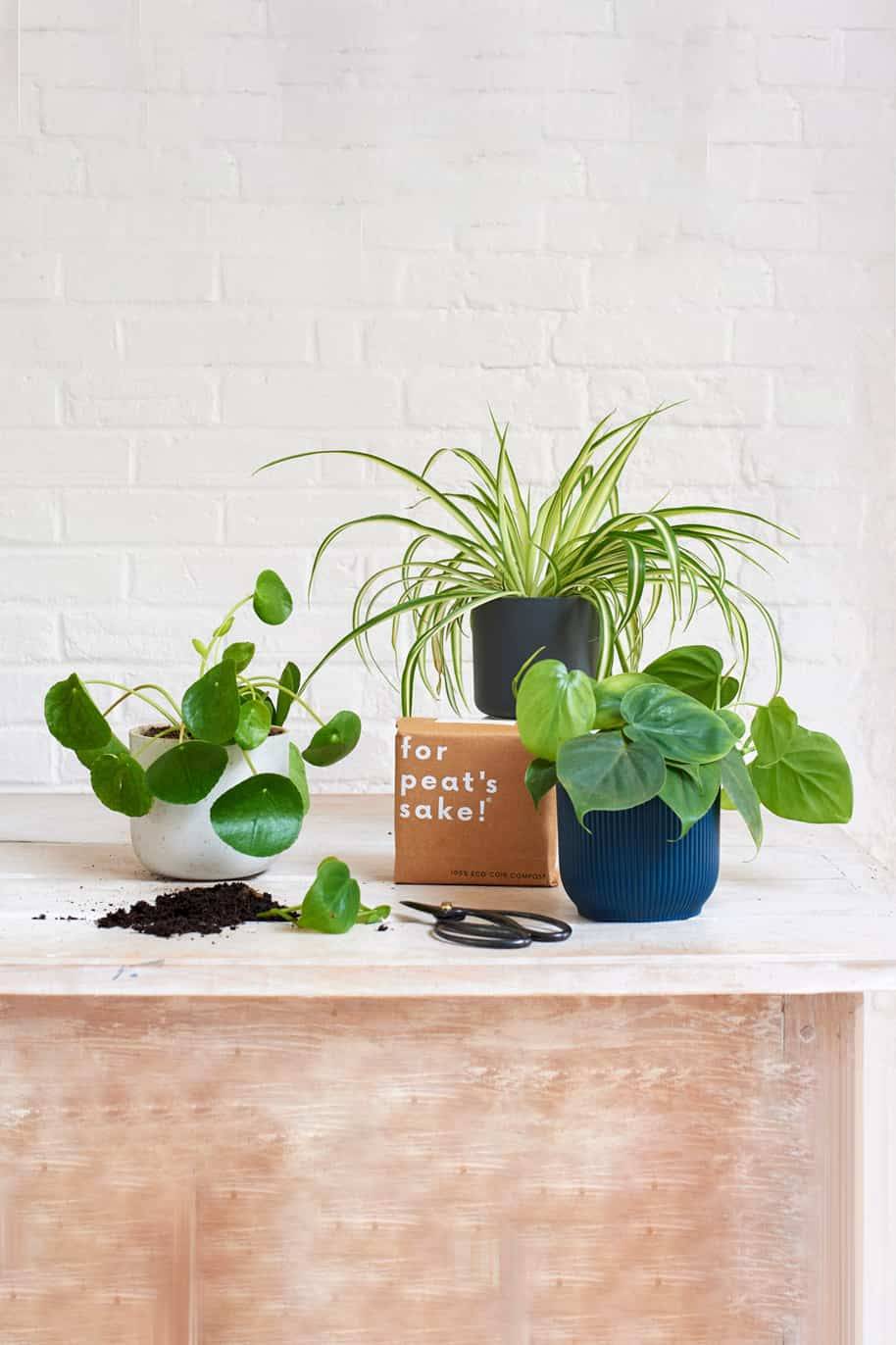
Why settle for just one plant when you can have a bundle that keeps on giving? Our Propagation Plant Bundle features three easy-to-propagate plants: Spider Plant, Chinese Money Plant, and Philodendron. Each of these low-maintenance beauties can produce new plants from stem cuttings, making them perfect for plant enthusiasts who love to expand their green collection. Ideal for both beginners and experienced gardeners, this plant bundle will enhance your indoor garden with its vibrant greenery. Enjoy the satisfaction of growing and sharing your plant babies with friends and family.

Plants included: 12cm(Pot size) Spider Plant, 12cm(Pot size) Chinese Money Plant & 12cm(Pot size) Philodendron Scandens

Australian Umbrella Tree (Schefflera Arboricola)

Plant Bio

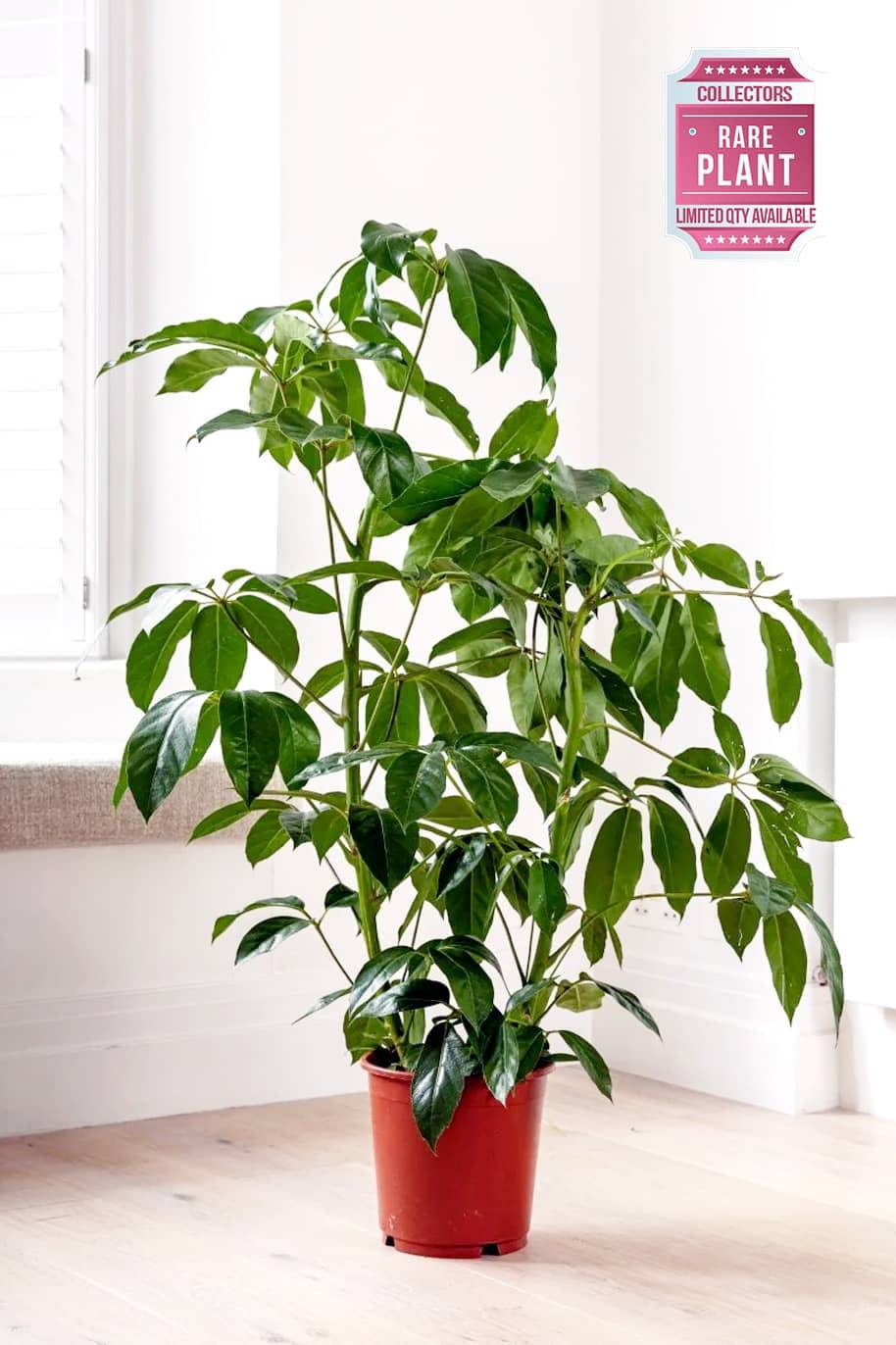
Elevate your indoor space with the stunning Australian Umbrella Tree, now available at Plantshop.me. This lush tropical beauty, also known as Schefflera actinophylla, is the perfect addition to any UAE home or office.

With its distinctive umbrella-shaped leaf clusters, this indoor plant adds a touch of exotic elegance to your decor. The Australian Umbrella Tree is prized for its air-purifying qualities, helping to create a healthier environment while enhancing your interior design.

This low-maintenance plant thrives in bright, indirect light, making it ideal for UAE homes. Its adaptability to various indoor conditions means you can enjoy its verdant foliage year-round. Water moderately, allowing the soil to dry slightly between waterings, and mist occasionally to maintain humidity.

The Australian Umbrella Tree pairs beautifully with other tropical plants like Monstera or Ficus for a lush, jungle-inspired look. It’s also an excellent standalone statement piece, growing up to 8-10 feet tall indoors with proper care.

Whether you’re a seasoned plant parent or a beginner, this hardy indoor tree is an excellent choice. Buy your Australian Umbrella Tree indoor plant today from Plantshop.me and transform your space with a touch of tropical paradise.

Syngonium Milk Confetti Mini (Syngonium)

Plant Bio

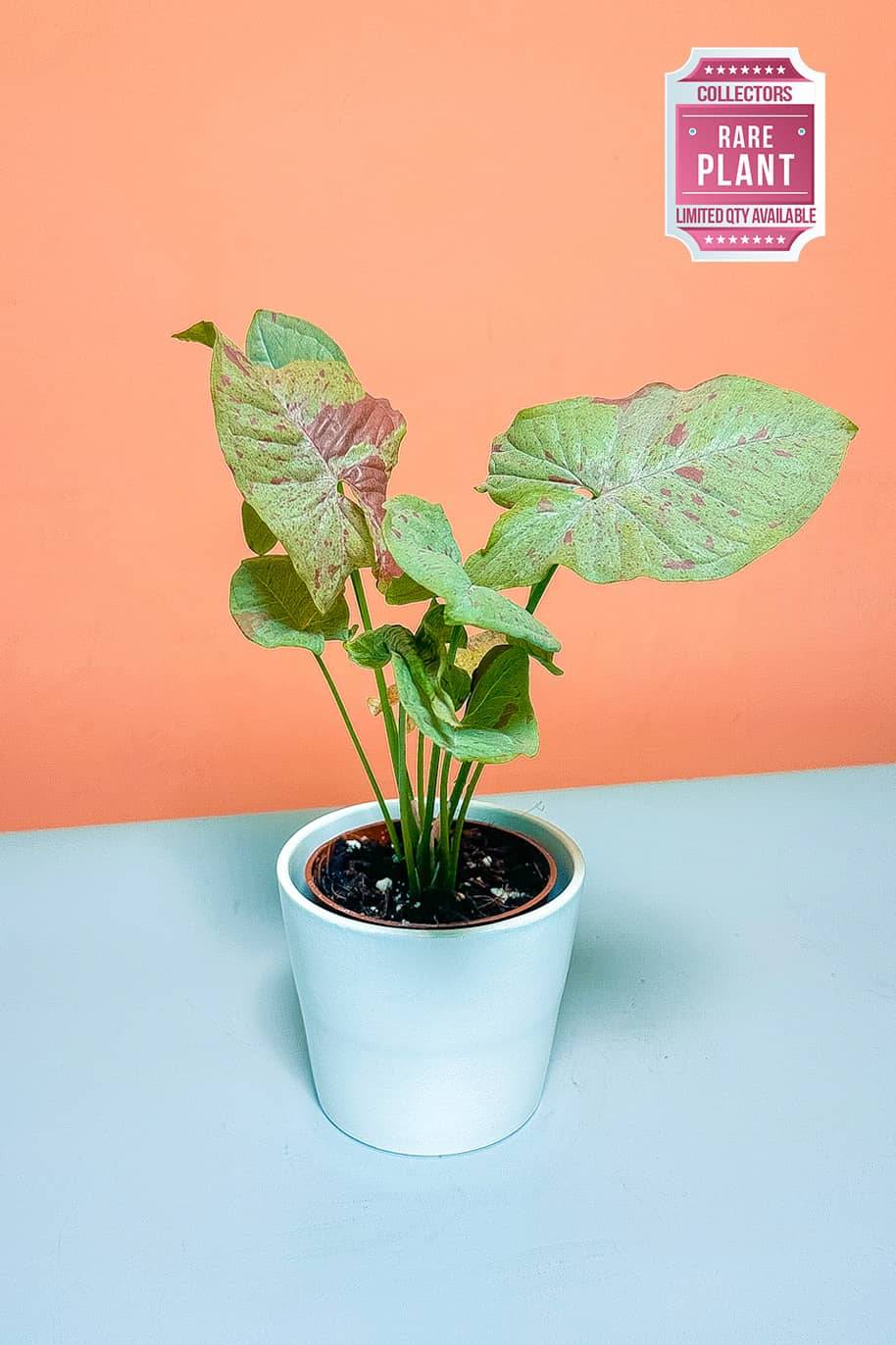
Syngonium Podophyllum Milk Confetti also known as arrowhead plant is a desirable aroid that boast arrow-shaped leaves and beautiful green to pink variegation. Syngonium is a considered a fast growing climber from the Aracae family.

Syngonium Podophyllum Milk Confetti also known as arrowhead plant is a desirable aroid that boast arrow-shaped light green leaves and beautiful pink variegation. Syngonium is a considered a fast growing climber from the Araceae family. This variegated form is unusual by having small areas of colourful variegation on the leaves. As the plant ages it will begin to vine, therefore putting it in a hanging basket might be a good idea!

Given their natural habitat, which is usually around forest floors, Variegated Syngonium plants are used to receiving dappled light. Note that too much direct sunlight can cause the leaves to scorch and have a white bleached appearance.

Ideally, you should water your Arrowhead plant once the top inch of the soil surface feels dry to the touch. A moist soil but not too soggy is what you’re after. Plus with regular watering, the plant tends to grow quickly.

During the spring and summer, it is best to have your arrowhead vine dry out partially in between watering cycles but should never be left to dehydrate completely, as this can result in yellow leaves. Meanwhile, at the onset of winter, watering is subsequently reduced.

While it’s correct to assume that variegated Syngonium would prefer a warm spot and a high humidity level, an average room temperature ( if treated as an indoor plant ) would work just fine.

Try to maintain an even temperature between 60°F and 80°F (15°C – 26°C). Not letting the room temperature drop below 60°F ensures faster and optimum growth. However, it’s important to note that a warmer temperature would require you to water your plants more often.

Dracaena Yellow Coast Small (Dracaena)

Plant Bio

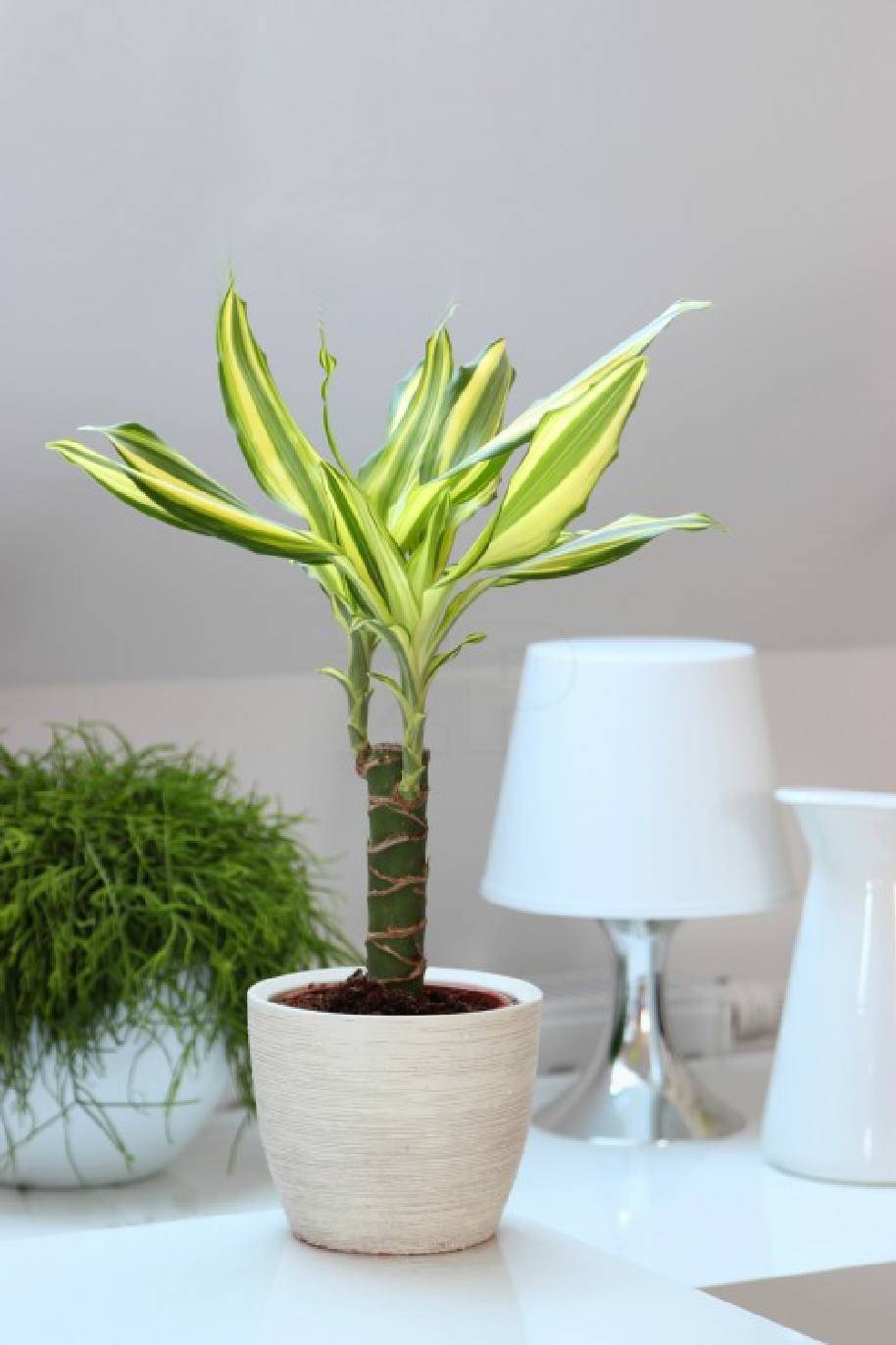
This Cornstalk dracaena (Dracaena fragrans) ‘Golden Coast’ has very striking, dark green leaves with white stripes giving it a fantastic contrasting look! Lots of light but well away from direct sunlight – at least 3 meters from the window is ideal. Greenery indoors – always a perfect addition to any home!

Dracaena fragrans are often considered to be low light tolerant plants but can’t thrive in extremely low light situations. In general, it’s good to have your plant within a few feet of a window. Monitor your plant for signs of leaf drop or scorching and adjust its location as needed. The easiest way to tell if your Dracaena needs water is to feel the soil. If the soil is still moist ½ of the way down, then you shouldn’t water the plant. Only water when the soil is dry almost all the way through the pot. Fertilize once a month with an organic houseplant fertilizer, following the package instructions for dilution and administration. Golden coast plants like warm room temperatures 60-75°F (16-24°C). Cold winter drafts and heaters can damage the leaves.

Get the sun in your house with this green/yellow Dracaena Yellow Coast houseplant. You will become friends easily as the Dracaena Yellow Coast is very easy to take care of. When you don’t pay attention to him, he will not let you down.

Water – Drinkt a little
Light – Loves to stand in a half sunny/shady spot
Air purifying

Are you a real plant killer but you still want to enjoy extra green in your home? Then the Dracaena is the perfect candidate.

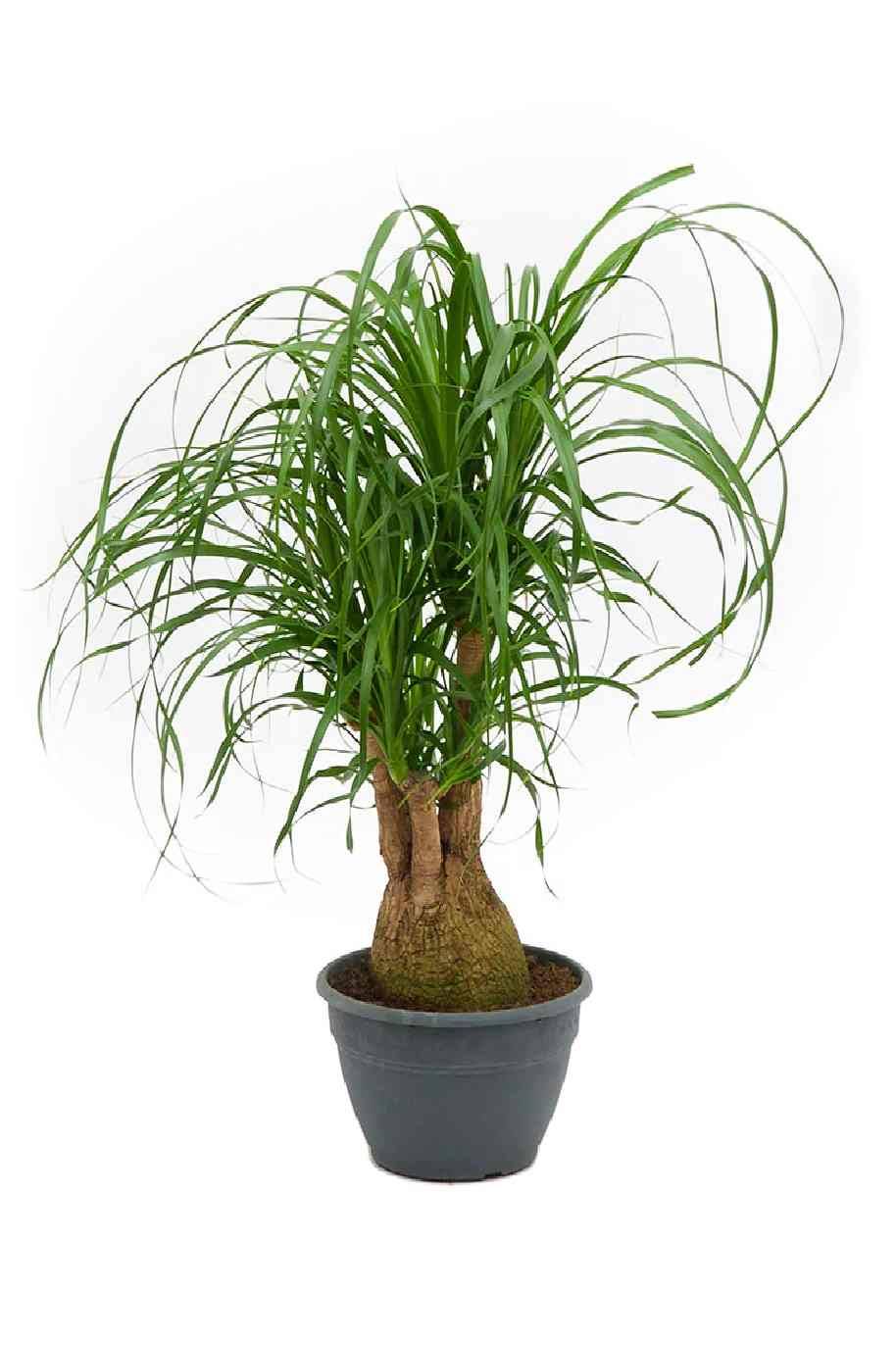
Ponytail Palm Branched (Beaucarnea Recurvata)

Plant Bio

This easy care branched version of Beaucarnea recurvata has a distinctive exotic look. Branches develop from the swollen base and trunk which stores water and looks a little like an elephant’s foot, being greyish brown with a wrinkled texture. Long slender leaves curve from the top of the stem like ponytails giving rise to its other common name Pony Tail Palm.

Buy Beaucarnea Recurvata or Ponytail Palm at Plantshop.me and transform your home with its unique charm! Known for its distinctive bulbous trunk and cascading leaves, the Ponytail Palm is not just a striking indoor plant; it also thrives in various environments. This low-maintenance plant is perfect for busy urban dwellers in Dubai, Abu Dhabi, and Sharjah, as it requires minimal watering, making it ideal for the UAE’s climate.

Place it in a well-lit room but out of direct sunlight to ensure its vibrant green foliage stays lush. Pair it with other drought-resistant plants, such as the Snake Plant or ZZ Plant, for an eye-catching display. With its air-purifying qualities, the Ponytail Palm contributes to a healthier indoor environment. Whether you’re a novice plant parent or an experienced gardener, the Beaucarnea Recurvata is a fantastic addition to any plant collection. Shop now and enjoy fresh greenery in your space!

Light
The Pony Tail Palm prefers bright, indirect sunlight, however will tolerate some degree of shade. However, your plant is more likely to grow in lighter conditions.

Watering
Although the base of the plant is a water store, your Pony-tail Palm will do best when watered thoroughly on a regular basis. The water store will help the plant survive if you forget occasionally!

Temperature
This Beaucarnea recurvata will thrive in cooler temperatures, therefore normal household conditions will be fine: anything from 5-25°C.

Humidity
This plant is perfect for low-humidity locations. As a desert-dweller, the Pony Tail Palm thrives in the dry air of heated homes.

Feed
Apply a light feed occasionally during the growing season.

Height & Growth Rate
PonyTail Palms are very slow growing plants. Over time, this plant will typically reach an indoor maximum height of around 2.5 metres.

Toxicity
Beaucarnea recurvata are non-toxic plants, and are safe to keep around small children and pets.

Air Purifying
Palms clean and improve air quality by filtering formaldehyde, benzene and carbon monoxide toxins from the surrounding environment.

Dieffenbachia Tropic Marianne (Dieffenbachia)

Plant Bio

Dieffenbachias are comparatively simple plants to take care of and will provide you with a lush jungly look to your lounge room. Large broad vibrant leaves, dark-green across the edges and luminous lime within the centre. Dieffenbachia feature pointed, ovate leaves in a wide range of combos of green, cream, and white colors. A big, well-grown dieffenbachia can attain 10 ft, with leaves 20 inches lengthy. Nevertheless, the plants will not often attain this size in typical indoor situations. Dieffenbachia is a fast-growing plant that may obtain 2 ft in height within 12 months.

Dieffenbachia Tropic Marianne Planting and Care

Keep the Dieffenbachia Tropic Marianne plant indoors under bright indirect natural light or bright artificial light.
Protect the Dieffenbachia Tropic Marianne from direct sunlight as this can damage the foliage.
The soil should be well drained and fertile.
Do not over-water the plant.
During the main growing season, feed the plant with organic fertilizer once a month.
Remove dead, infected, or damaged plant parts and dispose of them away from the Dieffenbachia Tropic Marianne.
For any insect attack or disease, you can use Neem Oil, Eucalyptus Oil, or Citrus Oil spray for the primary treatment.
Check the soil moisture before watering it.

Dwarf Jade Afra Bonsa (Jade)

Plant Bio

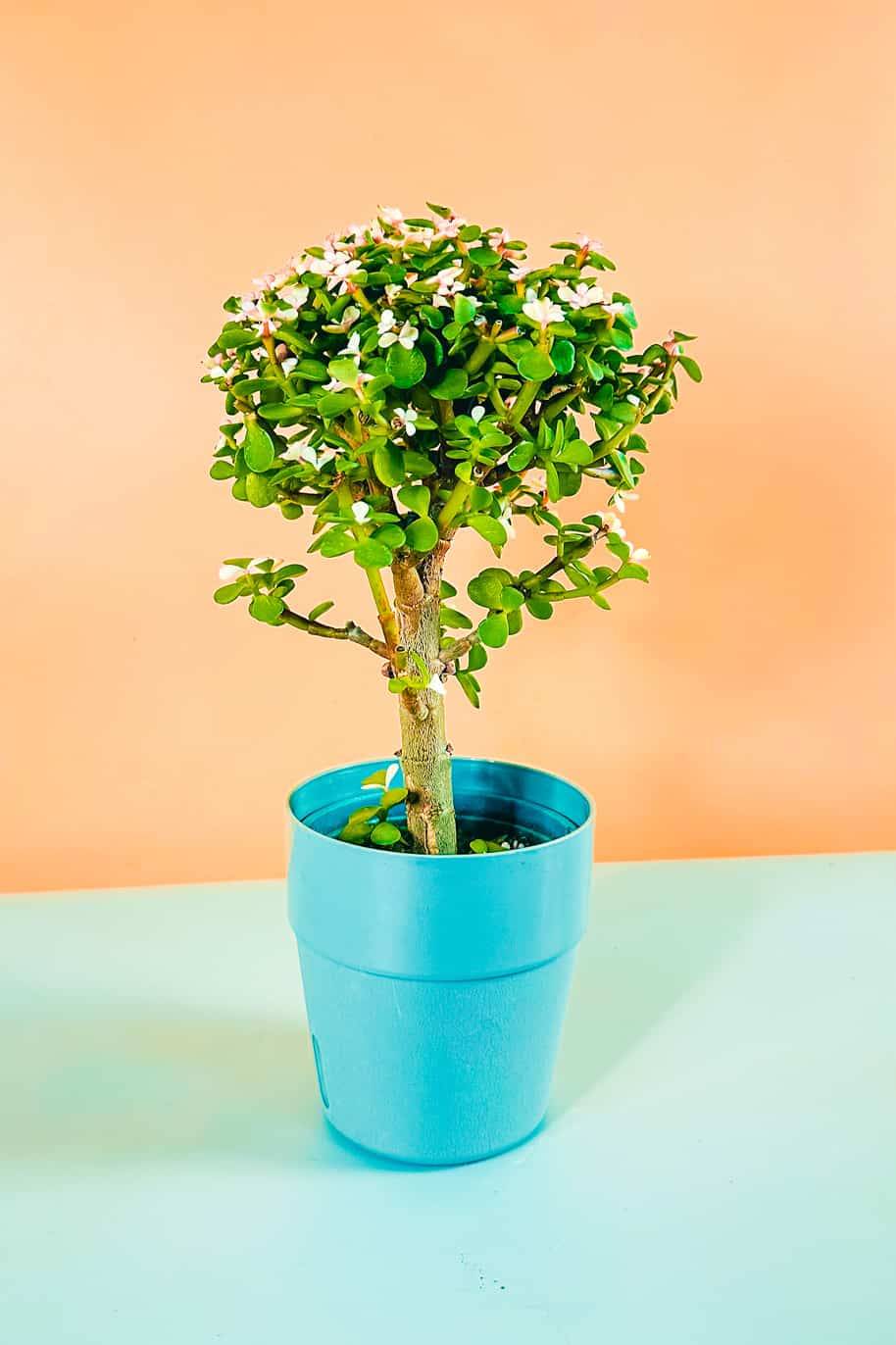
Originally from the dry regions of South Africa, the Dwarf Jade Afra is a fleshy, soft, woody small tree that grows up to 3m (10ft.) It has a thick trunk, but a fine branch structure with thick green oval-shaped succulent leaves.

The Jade is considered an indoor tree in most temperate zones, although it can be grown outdoors in full sun and high temperatures. Do not let temperatures drop below 40 °F (5 °C). It requires substantial light, full sun if possible, especially when kept indoors. You’ll know if your Jade tree is getting enough sunlight when it’s leaves develop red tips or edges.

Jade trees can hold large amounts of water inside their leaves, so water sparsely and allow the plant to dry out a little between watering. If the tree is kept relatively cold during winter months, watering can be done as seldom as once every three weeks. Monitor your tree closely and water the moment the soil dries out slightly. The Jade Bonsai is not as particular about over-watering as most other succulents.

Fertilize your Jade tree once a month, spring through autumn, during the growth season. Any normal fertilizer, as described in our fertilize section, should be fine.

During autumn months it occasionally blossoms white flowers, but only if there have been droughts in the season. The bark is green and soft when it’s young, and it transitions into a red-brown color as it ages. The Dwarf Jade (Portulacaria afra, or Elephant bush) is very similar to the Jade (Crassula ovata) and the same care guidelines apply to both species. As the name suggests, the Dwarf Jade has smaller leaves which makes it more suitable for Bonsai cultivation.

Back to Top

Search For Products

Product has been added to your cart
★ Reviews