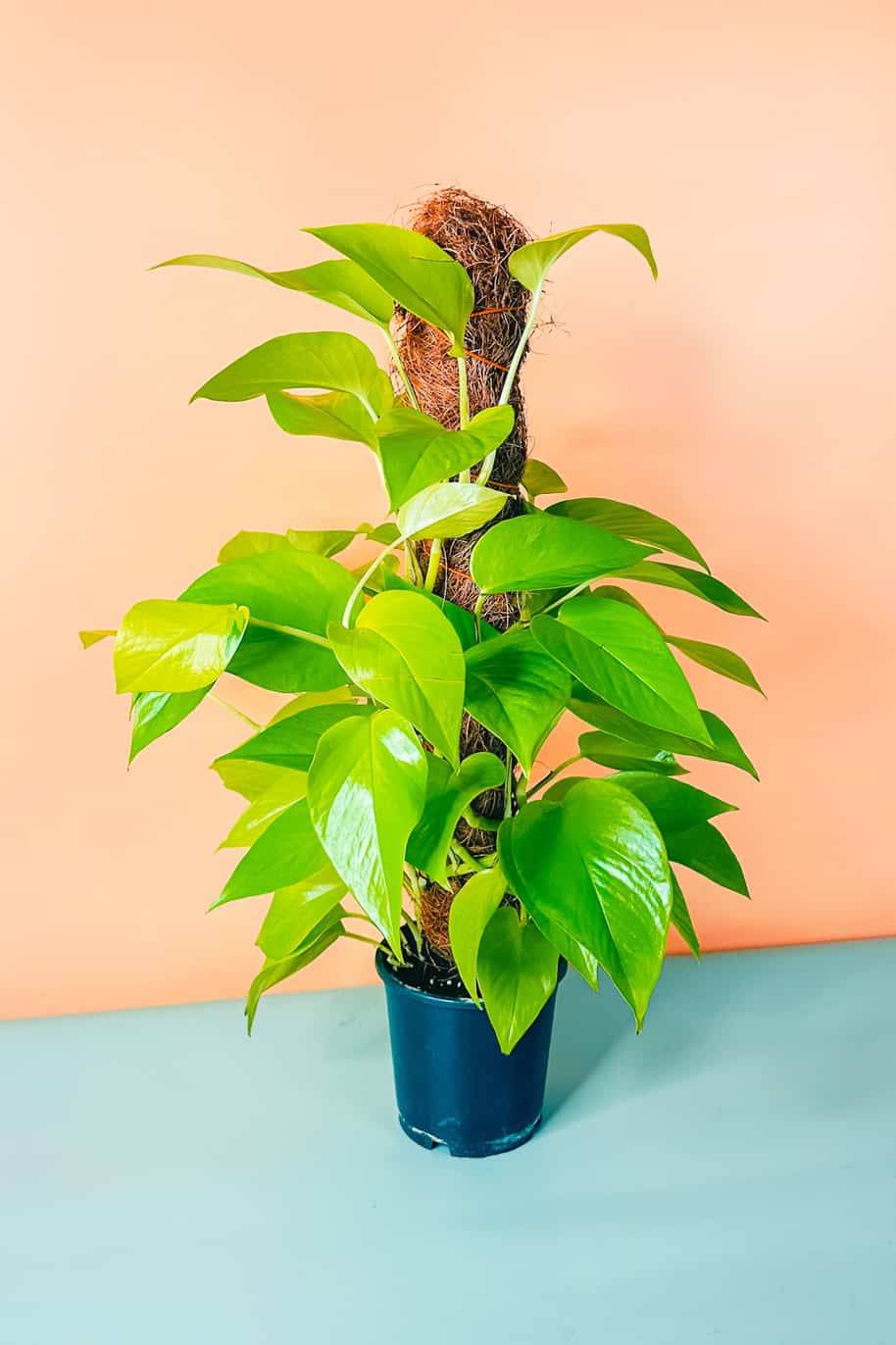
Neon Pothos Moss stick (Epipremnum aureum ‘Neon’)

Plant Bio

Neon Pothos (Epipremnum aureum ‘Neon’) is a popular houseplant known for its stunning bright green leaves that can grow up to several feet long. It is an easy-to-grow plant that requires minimal care and can thrive in a variety of indoor settings. Here are some tips for caring for your Neon Pothos:

Lighting: Neon Pothos prefers bright, indirect light, but can tolerate lower light conditions. Avoid direct sunlight as it can scorch the leaves.

Watering: Water your Neon Pothos when the top inch of soil feels dry to the touch. Overwatering can lead to root rot, so it’s important not to let the plant sit in standing water.

Soil: Use a well-draining potting mix with plenty of perlite or vermiculite to ensure proper drainage.

Temperature and Humidity: Neon Pothos thrives in average room temperatures between 65-85°F (18-29°C) and moderate to high humidity levels. Mist the leaves regularly to increase humidity.

Fertilizer: Feed your Neon Pothos with a balanced liquid fertilizer once a month during the growing season (spring and summer).

Pruning: Neon Pothos can grow quite long, so it’s a good idea to prune it occasionally to keep it manageable. You can also propagate the plant by taking stem cuttings and rooting them in water or soil.

Overall, Neon Pothos is a relatively low-maintenance plant that can bring a pop of color to any indoor space. With proper care, it can thrive and grow for years to come.
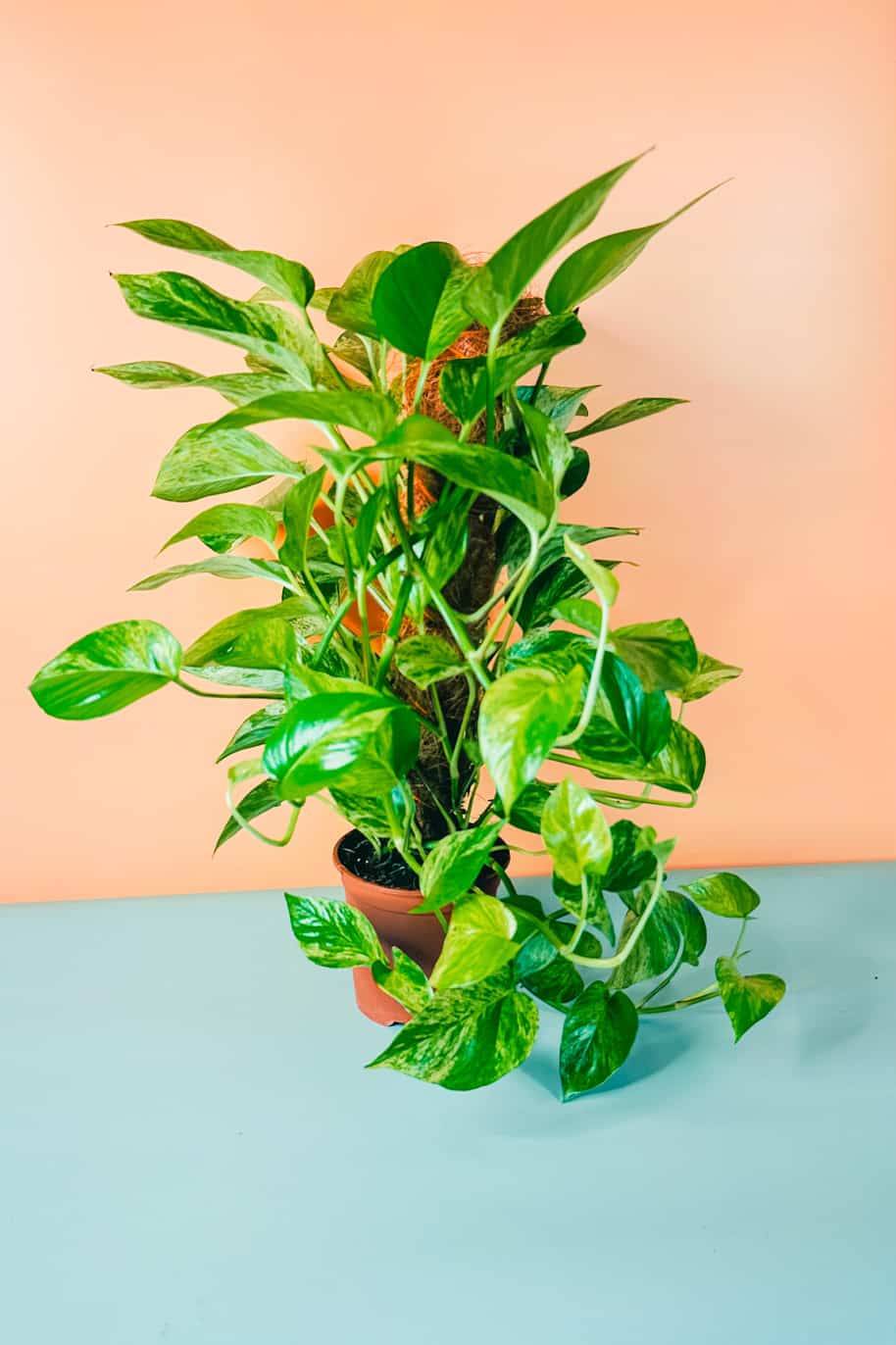
Marble Queen Pothos Moss Stick (Epipremnum aureum ‘Neon’)

Plant Bio

Marble Queen Pothos (Epipremnum aureum ‘Marble Queen’) is a popular houseplant known for its striking variegated leaves that are streaked with white and green. It is a hardy and easy-to-care-for plant that can thrive in a variety of indoor settings. Here are some tips for caring for your Marble Queen Pothos:

Lighting: Marble Queen Pothos prefers bright, indirect light, but can tolerate lower light conditions. Avoid direct sunlight as it can scorch the leaves.

Watering: Water your Marble Queen Pothos when the top inch of soil feels dry to the touch. Overwatering can lead to root rot, so it’s important not to let the plant sit in standing water.

Soil: Use a well-draining potting mix with plenty of perlite or vermiculite to ensure proper drainage.

Temperature and Humidity: Marble Queen Pothos thrives in average room temperatures between 65-85°F (18-29°C) and moderate to high humidity levels. Mist the leaves regularly to increase humidity.

Fertilizer: Feed your Marble Queen Pothos with a balanced liquid fertilizer once a month during the growing season (spring and summer).

Pruning: Marble Queen Pothos can grow quite long, so it’s a good idea to prune it occasionally to keep it manageable. You can also propagate the plant by taking stem cuttings and rooting them in water or soil.

Pest control: Watch out for mealybugs, spider mites, and scale insects, which can all be problematic for Marble Queen Pothos. If you notice any signs of infestation, treat the plant with insecticidal soap or neem oil.

Overall, Marble Queen Pothos is a beautiful and low-maintenance plant that can add a touch of elegance to any indoor space. With proper care, it can thrive and grow for years to come.
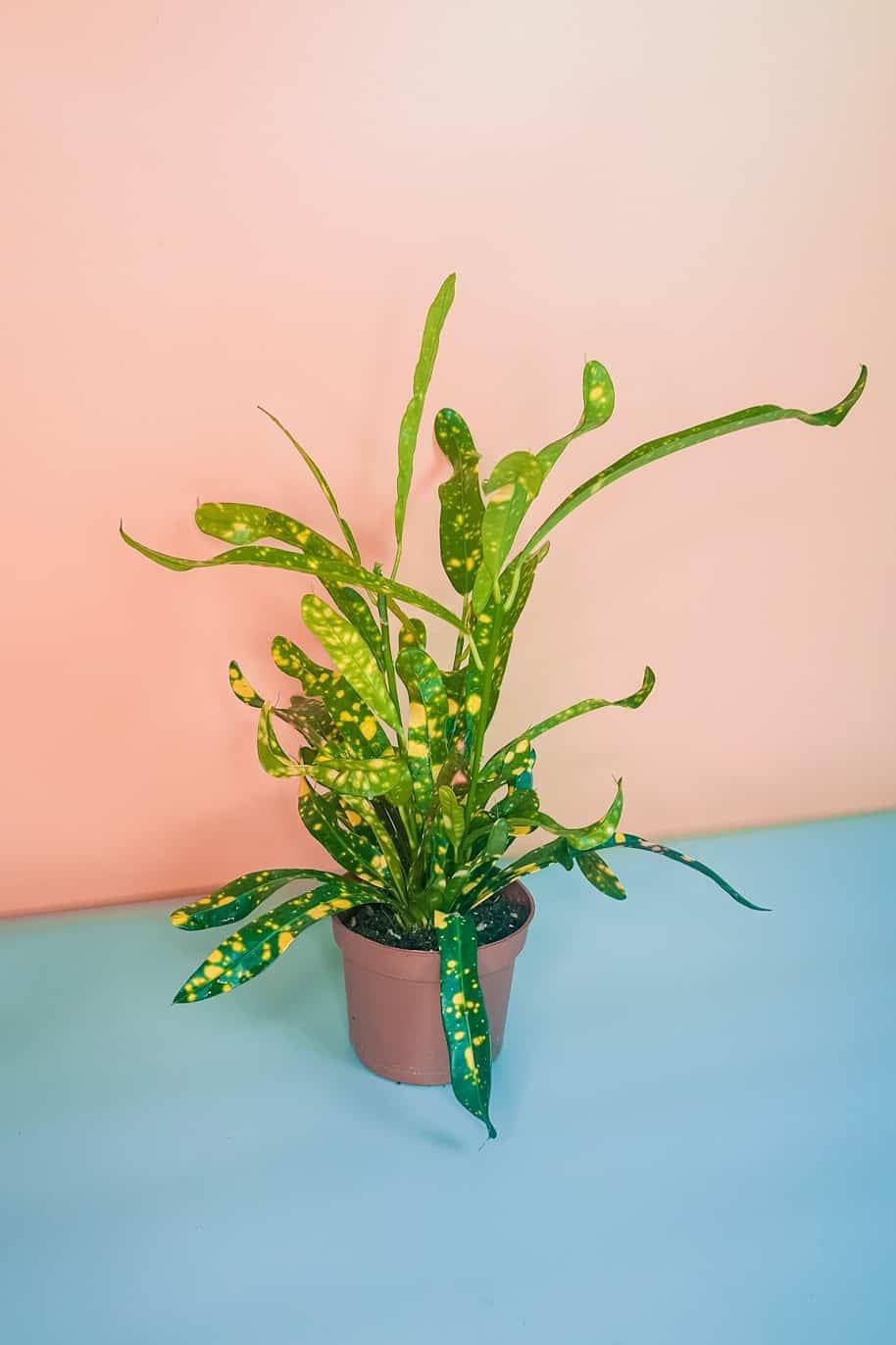
Croton Stardust Small (Codiaeum Variegatum Excellent)

Plant Bio

Variegated Croton also known as Codiaeum variegated or Garden Croton, is a species of plant in the genus Codiaeum, which is a member of the family Euphorbiaceae. It is native to Indonesia, Malaysia, Australia, and the western Pacific Ocean islands, growing in open forests and scrub. The croton plant is often grown outdoors in tropical climates, but also make excellent houseplants. Crotons come in a wide variety of leaf shapes and colors. Leaves can be short, long, twisted, thin, thick and several of these combined. Colors range from green, variegated, yellow, red, orange, cream, pink and black to a combination of all these. It is safe to say that if you look hard enough, you will find a croton that matches your décor.

Croton plants do not like to be moved, and when they are moved, they can quickly go into shock which results in leaf loss. Therefore, it’s best to avoid moving the plant as much as possible. In situations where moving the plant is unavoidable, don’t panic at the leaf loss. Simply maintain proper care and the plant will regrow its leaves within a short period of time, after which, it will prove to be a resilient houseplant. Caring for a croton involves proper watering and humidity. Because it is a tropical plant, it does benefit from high humidity, so placing it on a pebble tray or regular misting will help keep it looking its best. Croton growing in containers should only be watered only when the top of the soil is dry to the touch. Then, they should be watered until the water flows out the bottom of the container. The plant should also be kept away from drafts and cold, as it cannot tolerate temperatures.

Croton Stardust Small is a vibrant houseplant that brings a splash of color to any space with its glossy, green leaves adorned with golden-yellow speckles, reminiscent of a starry night. This compact plant is perfect for indoor environments, adding a lively, tropical vibe to tabletops, shelves, or windowsills. It also thrives in gardens, patios, or balconies in the UAE, where its bold hues stand out beautifully.

Croton Stardust Small prefers bright, indirect sunlight to maintain its striking coloration. It thrives in well-draining soil and requires moderate watering, allowing the top inch of soil to dry between waterings. Its compact size and minimal care needs make it an excellent choice for busy plant enthusiasts or as a gift for plant lovers.

Pair this Croton with other tropical plants like Snake Plants, Peace Lilies, or Pothos to create a stunning indoor jungle. For outdoor gardens, it complements other colorful foliage plants such as Coleus or Bougainvillea.

Care tip: Ensure a humid environment by misting the plant occasionally or placing it near a humidifier. Avoid placing it in drafts or direct sunlight to prevent leaf scorch. Bring home the Croton Stardust Small for a touch of celestial beauty!

Dracaena Fragans Rikki Tall (Dracaena Fragans Rikki)

Plant Bio

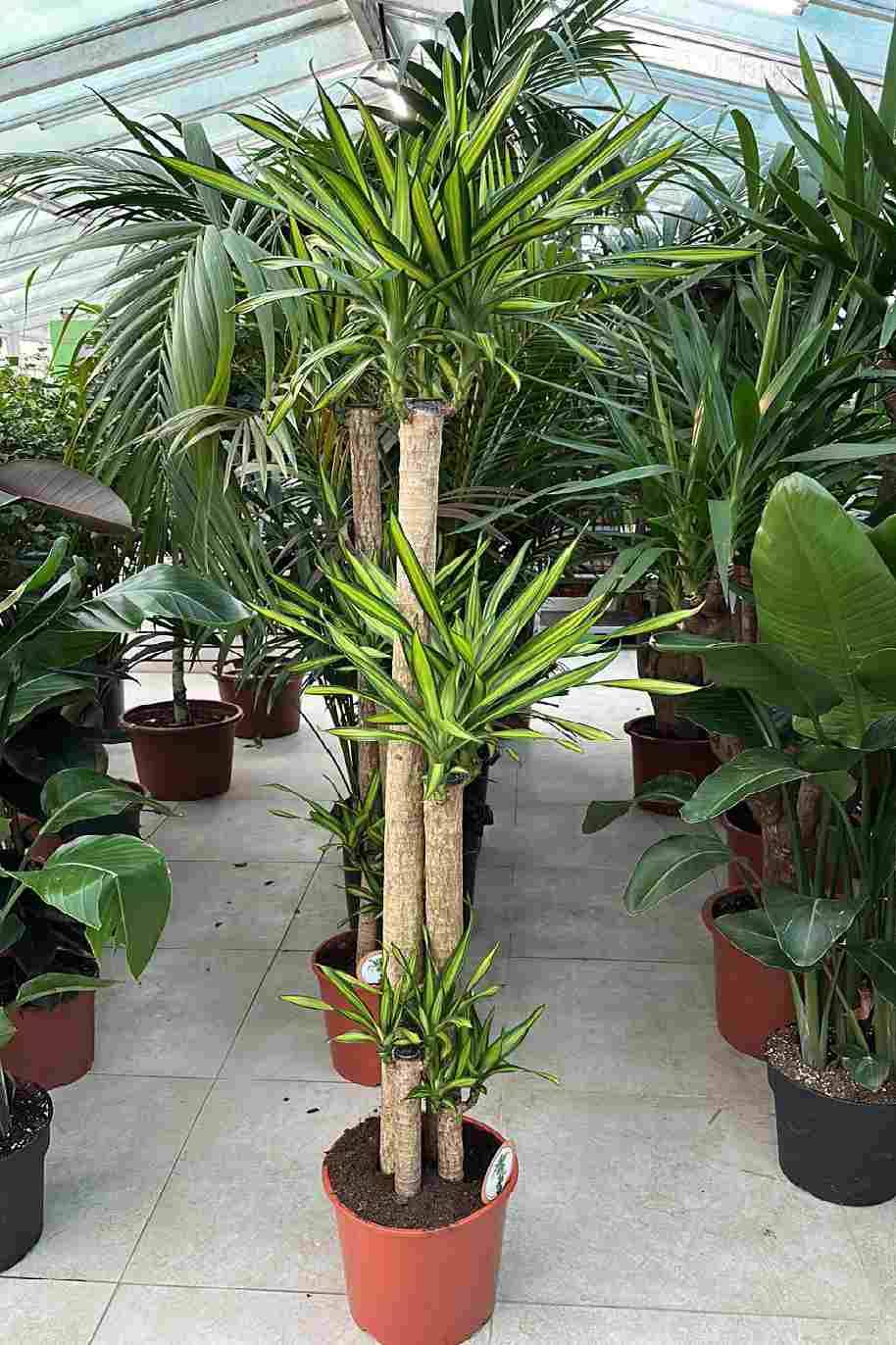
Dracaena Rikki (Dracaena deremenis “Rikki”) also know as Corn Plant, is a relatively new type of dracaena recognized by arching, deep green leaves, each marked with a yellow stripe running lengthwise down the center of the leaves. Corn plants produce leaves that look similar to corn leaves but remain green year-round. Although they are primarily grown for their foliage, they also produce yellow-white blooms when properly cared for.

Place corn plants in a location that receives bright but indirect sunlight. Direct sunlight can scorch and damage the foliage. The plant tolerates low light better than direct sun. Corn plants can’t tolerate cold temperatures and grow best when the indoor temperatures remain between 15 – 20 c (60-70 F).

Pinstripe Calathea Holland (Calathea)

Product Bio

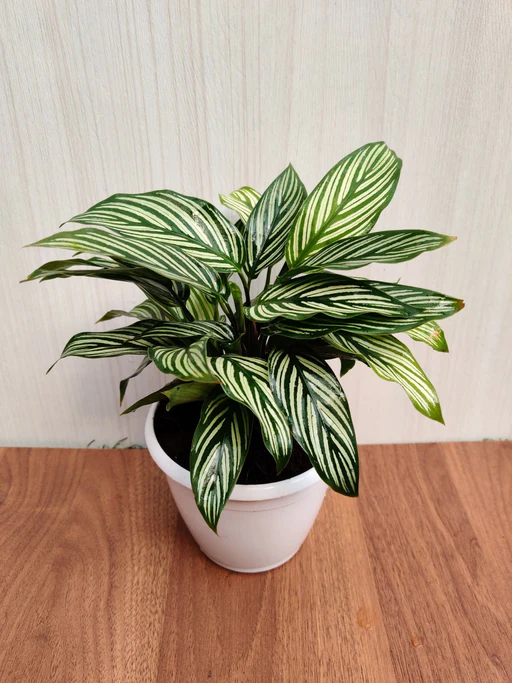
Add a sophisticated touch to your indoor plant collection with the Pinstripe Calathea Holland, a stunning tropical plant known for its striking foliage. Native to South America and loved for its pink pinstripe markings on deep green leaves, this variety brings a refined elegance to any home or office space.

Perfect for the UAE’s indoor environments, the Pinstripe Calathea Holland thrives in indirect light and humid conditions. Its non-toxic nature also makes it a safe choice for households with pets and children. Place it on a tabletop, shelf, or decorative plant stand to instantly enhance your interior aesthetics.

This Calathea pairs well with other humidity-loving plants like Peace Lily, Spider Plant, or Ferns, creating a vibrant and healthy indoor jungle.

Care Tips: Keep the soil consistently moist but not soggy. Use distilled or filtered water to prevent leaf edge browning. Avoid direct sunlight and keep in a humid spot or near a humidifier. Feed with a diluted liquid fertilizer monthly during the growing season.

Buy Pinstripe Calathea Holland today from Plantshop.me and enjoy doorstep delivery in Dubai, Abu Dhabi, Sharjah, and across the UAE.

Golden Pothos Mini (Pothos)

Plant Bio

Golden Pothos (Scindapsus aureus) plants are among the most popular houseplants for their versatility and easy care. Golden Pothos have a yellow and green variegation which make them easily recognizable and popular in a variety of settings. Also known as Devil’s Ivy, Golden Pothos is naturally found in forests from Southeast Asia to the West Pacific. Typically a fast-growing strong climber, Golden Pothos can flourish as houseplants or climbers, indoor and outdoor, in full sun or partial shade, and requires little watering.

Basic pothos care is very easy. These plants enjoy a wide range of environments. They do well in bright indirect light as well as low light and can be grown in dry soil or in vases of water. They will thrive in nutrient rich soil, but do almost as well in nutrient poor soil. Pothos plants make a great addition to you bathroom or office because they can tolerate low light. While pothos likes a wide variety of light conditions, they do not do well in direct sunlight. Pothos is very popular due to the fact that it can be grown in water or in dry soil. Cuttings can be taken from a mother plant and rooted in water and kept in water as a houseplant. This is convenient for placing a pothos plant in hard to reach areas in a jug of water where they can remain untouched as long as water remains in the jug. On the opposite end, pothos can also be started in soil and will tolerate moderate periods of dry soil with little effect to the plant. Oddly enough, cuttings started in one growing medium have a hard time switching to the other. So, a pothos plant started in soil has a hard time thriving if moved to water and a pothos cutting started in water will not do very well in soil, especially if it has spent a long period of time growing in water. You can fertilize your pothos plant about once every three months and this will help the plant grow more quickly, but most people find that their plants grow quick enough even with being fertilized.

While pothos plants are an easy to care for houseplant, you do need to be aware that they are poisonous. Even the sap from the plant may cause highly sensitive people to break out in a rash. It is considered toxic to cats, dogs and children, but as mentioned, it normally will make them very sick but it isn’t fatal.

Calathea Freddy (Calathea Goeppertia)

Plant Bio

Calathea plants are native to Africa, the West Indies, and Central and South America. All are treasured for their large, oval, distinctly patterned, and vibrantly colored leaves. The beautiful striped leaves grow at the end of long stems and require quite a bit of care to stay looking good.

The leaves of calathea plants are easily damaged by the quality of the water you use. Use distilled water or rainwater. Calathea plants like moist but not soggy soil at all times; never let the plant sit in water. Allow the top 2- inches of the soil to dry out before watering. Calathea plants need high humidity and when the air is too dry they develop brown leaf edges. Increase the humidity by placing the plant on a tray of wet pebbles, setting a humidifier near-by, or by grouping plants together to create a mini-greenhouse effect.

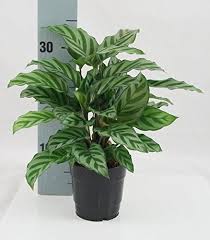
Colour and texture that instantly makes your day bright, the Calathea Freddy, is a smaller but handsome indoor or outdoor (given the right undercover position) plant. A pattern of pastel versus bright green, like looking into a calm and collected kaleidoscope. This Calathea is bursting with full and attractive foliage ready to purify the air in your home and add the most attractive splash of green with those slightly ruffle-edged and fascinating leaves.

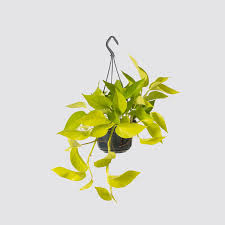
Neon Pothos Hanging (Pothos)

Plant Bio

Neon Pothos plants are among the most popular houseplants for their versatility and easy care. Neon Pothos have yellowish leafs which make them easily recognizable and popular in a variety of settings. Typically a fast-growing strong climber, Neon Pothos can flourish as houseplants or climbers, indoor and outdoor, in full sun or partial shade, and requires little watering.

Pothos is arguably the easiest of all houseplants to grow, even if you are a person who forgets to water your plants. One advantage of growing pothos is that they are high on the list of plants that can help purify indoor air of chemicals such as formaldehyde, trichloroethene, toluene, xylene, and benzene.

Neon Pothos is able to adapt to lower light but thrives in bright, indirect light year-round. Harsh, direct sunlight will scorch the leaves, while too little light will cause the leaves to become a pale green and smaller in size. Water Pothos enough to keep the soil moist, but not wet or saturated. It’s best to water when the top inch of the soil is dry. Don’t worry if you forget—it will occasionally tolerate a missed watering! Look out for drooping yellow leaves, they are a symptom of too much water.

Your bathroom or kitchen would be a great choice for your Neon Pothos because it does best in a slightly more humid environment. Brown leaf tips may indicate the air is too dry. Feed monthly in the spring through fall with general-purpose indoor plant fertilizer. Before applying any fertilizer in any form make sure the soil is damp prior to application.

Feel free to trim your Neon Pothos regularly. This encourages the plant to develop more side-shoots and reduces the demand for the plant to develop a larger root system while in a confined container.Pothos is mildly toxic to pets and humans. Typically, ingestion will cause mouth and stomach irritation and possible vomiting.

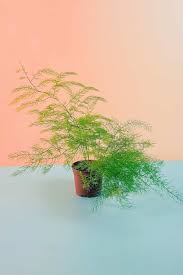
Asparagus Fern Mini (Doryopteris cordata)

Plant Bio

Asparagus Fern is not a true fern, but a member of the lily family (Liliaceae). Long, arching stems densely covered with short, needle-like leaflets give this plant a delicate appearance. It has a cascading habit that makes it ideal for a hanging basket. Mature plants will bloom in summer with small, white-to-pale pink flowers, sometimes followed by clusters of green berries that turn red in the winter. These berries are poisonous if eaten. Florists love the feathery, emerald-green foliage in bouquets.

The asparagus fern thrives in dappled shade, although it can be acclimated to more light. Avoid direct, bright sunlight and try to maintain a warm temperature. If you have a shady porch outside, or a greenhouse, the indoor plants will likely respond with abundant growth over the summer. Asparagus ferns should be planted in loose, well-draining potting soil. Keeping an asparagus fern hydrated takes a little effort. This plant thrives on humidity. Mist the plant daily, focusing on the arching stems. These plants are considered poisonous and should be kept away from pets and children.

Back to Top

Search For Products

Product has been added to your cart
★ Reviews